
Feeding Your Dog on Vacation: 7 Practical Tips
With the right planning, feeding your dog on vacation stays relaxed. These 7 tips help with food quantity, routines and sensitive dog stomachs while traveling.
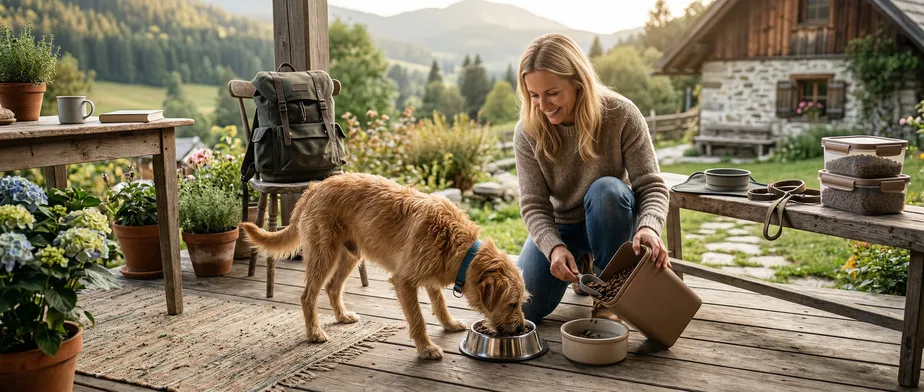
A vacation with your dog is much more relaxed when feeding is well planned. New surroundings, long car rides and an unfamiliar daily routine often have a direct impact on digestion and behavior. With a bit of preparation you can avoid a lot of stress, and your dog can enjoy the trip just as calmly as you do.
1. Take familiar food with you
Almost everything is different on vacation. That makes something reliable in the bowl even more important. Take the same food your dog knows and tolerates well. This supports digestion and helps prevent unnecessary problems. Sensitive dogs in particular often react to sudden food changes with restlessness or stomach issues.
2. Pack a little extra
Plan your food supply generously. Your dog’s usual food is not always available at short notice at your destination. This is especially true for special diets or certain brands. Also remember treats, chews and any supplements if they are a fixed part of your dog’s daily routine.
3. Keep feeding times as usual
Dogs rely heavily on routines. If possible, keep your usual feeding times roughly the same on vacation. This provides a sense of security and helps your dog find their bearings despite many new impressions. Small deviations are usually not a problem, but major shifts often are.
4. Feed lightly before you set off
Before a long journey your dog should not have a large meal. A full stomach can make traveling much more uncomfortable, especially for nervous or travel-sick dogs. A light meal with enough time before departure works better. On longer trips, regular breaks, fresh water and a calm atmosphere are particularly important.
5. Bring enough water
Alongside food, proper hydration is essential. Take water with you for the journey and offer it to your dog regularly. In warm weather, with lots of activity or excitement, their needs often increase noticeably. A portable bowl is practical when traveling and makes it easier to offer water at any time.
6. Go easy on the extras
Your dog is allowed to enjoy vacation time too. Still, extras should remain the exception. Too many treats, table scraps or unfamiliar snacks quickly upset the stomach. Try to stick to the usual amounts, even on holiday. This keeps the diet balanced and makes digestive issues less likely.
7. Watch behavior and tolerance
Every dog reacts differently to a change of location. Some eat less at first, others are suddenly hungrier than at home because they move more. Pay attention to eating habits, stool consistency and your dog’s overall condition. This helps you notice early whether the food is well tolerated or if the portion size needs a slight adjustment.
Good preparation keeps feeding stress-free
Feeding your dog on vacation does not have to be complicated. If you stick to what is familiar, pack enough and pay attention to your dog’s individual needs, you create a solid basis for relaxed days away. A well-fed dog is often more balanced and can cope better with new experiences. In the end, everyone benefits.
More articles
Dog & Summer Heat on Vacation: Travel Calmly and Safely
A summer vacation with your dog can stay relaxed even on hot days: with tips on shade, water, cooling, quiet breaks and safe routines in warm weather.

Mastering Training and Obedience When Traveling With Your Dog
Travel calmly with your dog and reinforce important cues like recall, loose-leash walking and positive training while on vacation.

Enjoy a Relaxing Winter Holiday with Your Dog
A winter holiday with your dog in a holiday home offers peace, nature and flexibility. Find out what really matters when it comes to planning, equipment and a relaxed break.

The best dog friendly holiday homes in Germany
Dog friendly holiday homes in Germany offer freedom, comfort and short distances into nature. Find out what really matters when it comes to choosing location and amenities for a relaxing holiday with your dog.

How to Keep Your Dog Healthy and Relaxed on Holiday
How to keep your dog healthy and relaxed on holiday: With good preparation, familiar routines and the right food, your stay in a holiday home can be truly restful.
Making Dog Training Relaxed During a Holiday Home Stay
A holiday home vacation with a dog creates calm, clear routines and ideal conditions for training. This makes it easier to strengthen your bond, work on training and truly enjoy your time together.
